
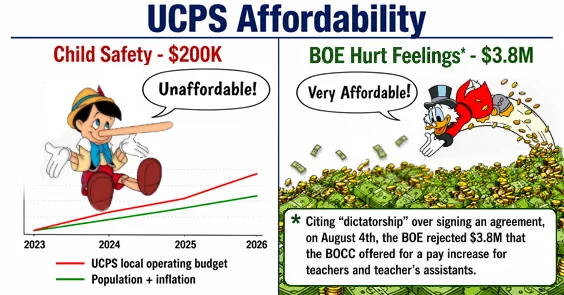
Waxhaw parents – if you want to understand the current controversy surrounding UCPS budget priorities, look at two numbers:
$3.8 million.
$200,000.
The first is the amount the Union County Board of County Commissioners offered specifically for teacher and teacher-assistant pay increases, contingent on an interlocal agreement.
The second is approximately what UCPS says it can no longer afford for traffic directors at schools.
For those of us in Waxhaw, this is affecting families at Waxhaw Elementary.
WAXHAW FAMILIES - If you have something to say about the lack of a traffic director in the afternoons at Waxhaw Elementary, you can sign up and speak for three minutes during the public comments at the next UCPS Board of Education meeting, 7pm Wednesday September 2, 2026 at the UCPS Professional Development Center (721 Brewer Drive, Monroe, NC). You can sign up in person up to 15 minutes prior to the start of the meeting, by phone up till 2pm of meeting day 704-296-9898, or online HERE.
$3.8 Million for Teachers
The BOCC set aside approximately $3.8 million specifically for teacher and TA supplements, but wanted UCPS to sign an agreement specifying that the money would be used for that specific purpose.
Last year’s dispute about teacher pay left the two boards with different understandings of what had been promised. The BOCC believed it was discussing an increase for classroom teachers and TAs. UCPS explained that they have historically defined “teacher supplement” as referring more broadly to certified staff, including nurses, counselors, media coordinators and others.
That’s why the county wanted something in writing this time. After all, the BOCC holds the taxing authority—and the political responsibility that comes with it. When taxpayers are asked to provide more money, it is the County Commissioners who have to answer for that decision at the ballot box—not the UCPS BOE members.
As one commissioner put it:
“Trust is something that is hard to earn and easy to lose.”
The commissioner said the agreement was intended to rebuild that trust “one step at a time.”
But on August 4, the BOE rejected the agreement.
Importantly, the BOE did not reject teacher raises altogether. It subsequently approved its own compensation plan.
So the question isn’t whether UCPS wants to pay teachers more.
The question is – why couldn’t the BOE agree to a written commitment concerning the additional $3.8 million?
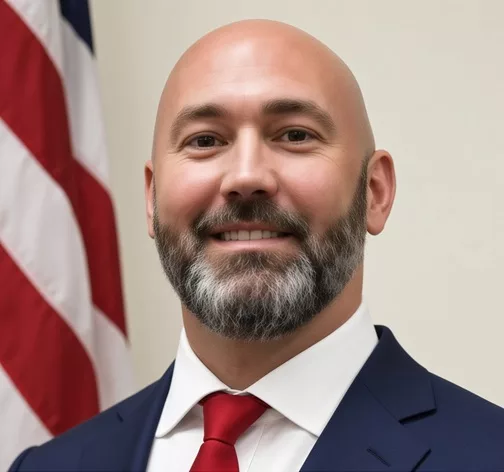
Credit where credit is due: BOE Vice Chairman Matt Helms, who represents our district, voted in favor of accepting the additional county funding. Helms recognized that the $3.8 million represented an opportunity to put additional money toward teacher and TA compensation while providing taxpayers with clear expectations about how those funds would be used. That deserves to be acknowledged.
Meanwhile, in Waxhaw…
While the UCPS board was turning down $3.8 million, UCPS administration was cutting traffic directors.
Waxhaw Elementary was initially slated to lose its traffic director entirely. Town officials and parents immediately pointed out the obvious problem: Waxhaw Elementary’s traffic pattern is already challenging, and eliminating the person directing traffic would make getting children safely in and out of the school considerably more difficult. The August 4 BOE meeting included public comments specifically asking the district to reconsider the Waxhaw decision.
After further discussions and review, UCPS ultimately restored the traffic director at Waxhaw Elementary—but only for morning drop-off. There is still no traffic director for afternoon dismissal.
In a meeting with UCPS staff, the Town of Waxhaw and NCDOT were able to demonstrate that the original decision created a legitimate safety and traffic problem. UCPS responded by partially reversing the cut.
But why did the decision have to get that far in the first place?
Who Decides What Gets Cut?
This raises a larger question about how UCPS budget priorities are being managed.
The superintendent and administration are driving the current “right-sizing” effort. At the August BOE meeting, one parent challenged that terminology, saying:
“There’s nothing right sized about having no skilled traffic guards and putting kids at risk of traffic collisions.”
It isn’t that a superintendent shouldn’t manage the school system.
But there is an important difference between asking department heads to find efficiencies and having major service cuts appear to flow downward from administration without the elected Board of Education first establishing the priorities that should guide those cuts.
Waxhaw provides a useful comparison.
When the Waxhaw Board of Commissioners asked town departments to find approximately 5% in reductions, the departments themselves worked through their operations, identified potential savings and ultimately came back with approximately 7% in cuts.
That’s how I believe this process should work.
The elected board establishes the financial target and the priorities.
The departments determine how to meet them.
The elected board then reviews those recommendations and decides whether the proposed cuts are consistent with the community’s priorities.
That puts accountability where it belongs.
The Numbers Matter
The county isn’t claiming that UCPS has unlimited money.
But the budget deserves some perspective.
UCPS’s local operating budget has grown from approximately $124.6 million in 2023-24 to $154.4 million in 2026-27—roughly a 24% increase in three years. Over the same period, Union County’s population grew by approximately 5.9%, while cumulative inflation was approximately 13.3%. Combining population growth and inflation produces an increase of approximately 20%, meaning the UCPS budget grew roughly 4 percentage points faster than population and inflation combined.
Meanwhile, Union County officials say approximately 71% of the county’s property-tax rate goes toward education, with UCPS receiving the lion’s share of that funding.
The county also says it provided more than the state-required increase in UCPS operating funding and separately set aside the $3.8 million for teacher and TA compensation.
So when we’re told that approximately $200,000 for school traffic directors isn’t affordable, taxpayers have every right to ask:
What is being prioritized instead?
If cuts are necessary, which services are considered essential? Which are not? Who made those decisions?
Accountability Is Not an Insult
The county’s request for an interlocal agreement isn’t an attack on UCPS, it’s accountability.
If the BOE agrees that teachers and TAs should receive the additional money, putting that commitment in writing should not prevent it from doing so.
Likewise, if UCPS truly cannot afford traffic directors at every school, the public deserves to understand why—and what other priorities were considered before that decision was made.
Waxhaw has just seen what happens when the community pushes back on a questionable cut: UCPS reconsidered and restored the morning traffic director at Waxhaw Elementary.
That should tell us something.
Sometimes the problem isn’t that there isn’t enough money.
Sometimes the problem is where the people in charge have decided to spend it.
And that’s ultimately what this entire debate is about.
Not whether UCPS can afford it.
What UCPS chooses to afford.