
Waxhaw’s Board of Commissioners approved applications for transportation planning grants and heard updates on road maintenance, neighborhood fiber installations and rising fuel costs during its October 13 meeting.
Fiber work raises resident concerns
Town staff acknowledged complaints about telecommunications companies installing underground fiber, including damage to lawns, poorly placed utility boxes and repeated construction disruptions.
Kinetic and AT&T crews are currently working in Waxhaw, with six providers having pursued installations in town. Because providers have legal rights to use public rights-of-way, the town cannot simply prohibit the work, but it can enforce permit conditions related to safety, traffic and property restoration.
Staff said contractors are expected to document existing property conditions and restore disturbed areas to their original condition or better. Residents can report concerns to the town, which is tracking complaints and coordinating with providers. Information about planned work is available through the town’s website and social media.
Town outlines road maintenance strategy
Waxhaw plans to spend approximately $1.5 million over the coming months on road repairs and maintenance, drawing from more than $2 million available through Powell Bill funding.
The town is evaluating roads using periodic third-party assessments and staff inspections, with the goal of addressing deterioration before expensive reconstruction becomes necessary. Full-depth road replacement can cost approximately $900,000 to $1 million per mile, according to the presentation.
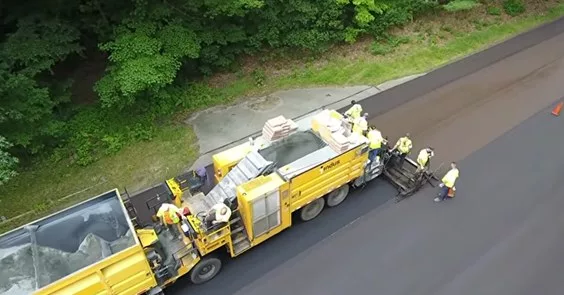
Staff is considering several repair methods, including microsurfacing and a newer process called Pressure Pave, which could extend pavement life without requiring complete reconstruction. Town representatives plan to visit Lexington to examine Pressure Pave in use before deciding how best to incorporate it into upcoming projects.
Transportation grant applications approved
Commissioners approved a resolution supporting two grant applications through the Charlotte Regional Transportation Planning Organization.
One would fund a planning study for the NC 16 extension corridor, with an estimated project cost of $300,000, including approximately $60,000 from the town.
The second would fund preliminary design for a multi-use path along Kensington Drive, extending the existing project from Connells Point Avenue to Morehouse Drive. The proposed path would improve pedestrian and bicycle connections between nearby neighborhoods, commercial areas, Town Hall and downtown Waxhaw.
The project would also address roadway geometry and connect with planned transportation improvements, including the NC 16 widening and an NCDOT bridge replacement. Town staff recommended a 50% local match, estimated at approximately $347,000, to strengthen the grant application and potentially reduce future construction costs.
Approval allows the town to pursue the grants but does not commit it to funding the projects’ construction.
Rising fuel costs could pressure town budget
Town staff reported that fuel costs rose approximately 33% year over year during the first quarter, despite efforts to control consumption. The town used about 13,000 gallons of fuel at a cost of approximately $71,000 during the quarter.
Staff is reviewing fuel types and negotiating a supply contract intended to provide greater price stability. Costs could rise further as diesel purchases and seasonal leaf collection increase demand. Fortunately, recent testing has shown that cheaper ethanol-based fuel can be more widely utilized on town vehicles, instead of the more expensive non-ethanol.
Efficiency program gains traction
During the Parks & Rec presentation, town staff referred to savings generated through the employee efficiency reward program as “Daunt Dollars.” The name shows a newly heightened awareness of a program the Board first approved back in 2024, at my initiative, to encourage employees to identify ways to reduce costs, improve operations, and make better use of taxpayer money.
For a couple of years, the program didn’t gain much traction because it was not adequately promoted among town staff. That’s why hearing employees use a new term is encouraging: it shows the program is finally on their radar. Hopefully, that awareness will translate into more employee ideas, measurable savings, and a more efficient town government.